
Get Paid Early: Cash Advance
StreamFunds, Inc.Finance
4.2166.00 Reviews
- Version
- 3.0.39
- Installs
- 50.00K
- Age Rating
- Everyone
Screenshots
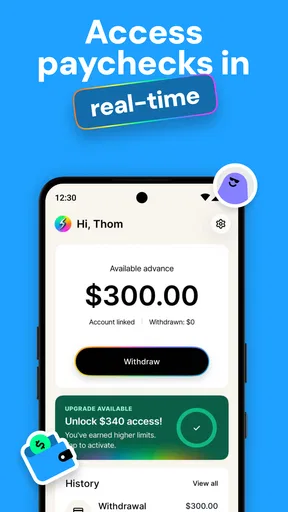
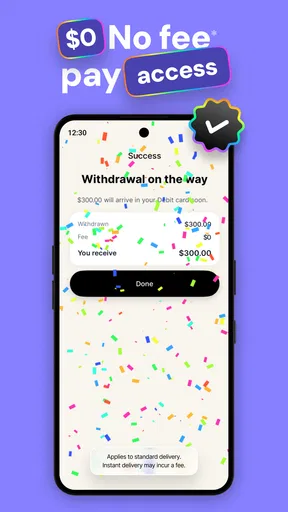
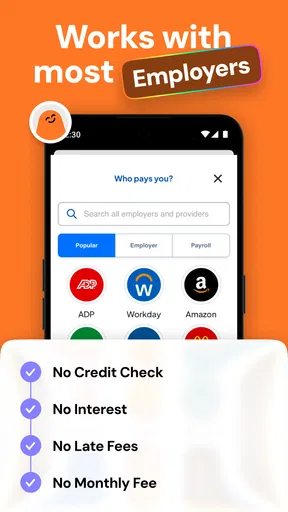
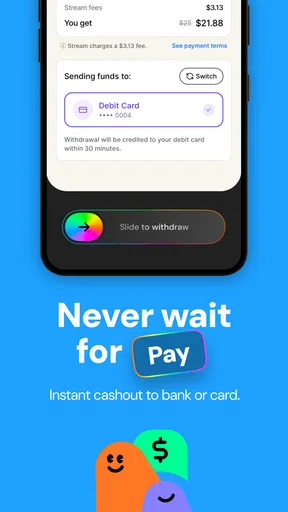
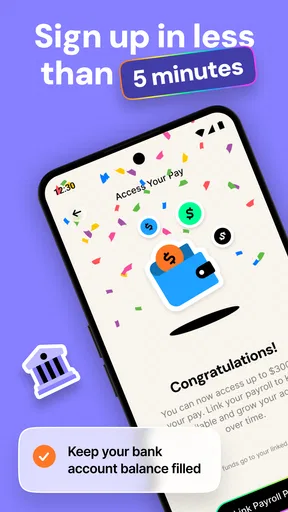
Our Review of Get Paid Early: Cash Advance
 Analysis by Appyee
Getting paid before payday sounds simple, but the useful question is what the process feels like when a real expense appears at the wrong time. I spent time looking at Get Paid Early: Cash Advance as a finance app from StreamFunds, Inc., and my impression is that it is aimed at people who need a practical bridge between work already completed and money that has not reached their bank account yet. Its promise is access to earned pay rather than a conventional loan, with no interest and no hidden fees presented in its store summary.
That distinction matters. This is not a budgeting app that helps you plan several months ahead, and it is not a replacement for a normal bank account. Its role is narrower: help eligible users handle a short gap between earning money and receiving the regular paycheck. I would recommend approaching it as a controlled cash-flow tool, not as extra income. Used with a repeatable routine, it may reduce the temptation to use a credit card or overdraft for a small, urgent bill. Used casually every pay cycle, it can make a tight budget feel permanently tight.
How the everyday workflow feels
The sensible starting point is to treat the app as part of a payday routine. I would first open it when I know an expense is coming, check the amount available, and compare that figure with the exact gap in my budget. The useful habit is to request only what solves the immediate problem rather than taking the largest amount shown. That keeps the next payday closer to its original purpose and makes the transaction easier to track.
A realistic example would be a utility bill arriving a few days before wages normally land. Instead of putting the full bill on a credit card, I would check whether the app shows enough earned pay to cover it, request only the necessary amount, and record the movement in my regular budget. The important step is recording it immediately. Even when access to earned pay does not work like borrowing with interest, money received early still changes how much remains for the normal payday.
The app’s free price makes it easy to try without committing to a subscription, and its Everyone content rating keeps the presentation broadly accessible. Still, “free” should not be confused with “effortless.” A finance service may require you to complete setup, connect the relevant employment or payment details, and wait for the app to determine what you can access. I would not install it for the first time on the morning a bill is due and assume it will solve the problem instantly.
My preferred workflow is to set up the account during a calm week, review the available options, and then leave the app alone until there is a genuine need. That approach gives you time to understand the screens and any timing shown for receiving funds. It also avoids making an urgent decision while stressed, which is when people are most likely to request more than they intended.
What the app is really good at
The strongest use case is a predictable income cycle with an occasional timing mismatch. Someone who is paid regularly but faces a rent, transport, or grocery expense shortly before payday may find this more suitable than a traditional cash advance product that adds interest. The phrase “earned pay” is important here: the app is designed around accessing wages already earned, not creating a new source of income.
That makes it less compelling for someone whose income is irregular, whose work details change frequently, or whose main problem is that monthly spending is higher than monthly earnings. In those situations, early access can postpone the shortage without fixing it. I would choose a proper spending plan, a conversation with the bill provider, or a longer-term emergency fund strategy instead.
It is also worth separating this service from a bank overdraft. An overdraft is usually attached to the account where payments are made and can be triggered accidentally. With this app, the user has to make a deliberate decision to access pay early. That can be a strength because it creates a moment to pause. The weakness is that a deliberate request can still become a habit if it is used to cover ordinary spending rather than an occasional timing issue.
Settings and account checks worth doing first
Experienced use begins with checking the account and notification settings before money is needed. I would make sure the personal and work information is current, review which bank destination is selected, and confirm that notifications are enabled only where they are useful. A notification that tells me an action has completed is valuable; a stream of reminders can encourage unnecessary checking or impulsive requests.
I would also review the app after any change in employer, payroll schedule, bank account, or contact details. A service built around earned wages depends on accurate information about where those wages come from and where funds should go. Keeping old employment or payment details in place can create confusion at exactly the moment you need clarity. This is one of the less obvious practical lessons: account maintenance is not housekeeping separate from the feature; it is part of making the feature dependable.
Before confirming a request, I would read every amount and timing indicator shown on the final screen rather than relying on memory from an earlier page. Finance apps often present an available amount that is different from the amount you actually want to receive. The safest pattern is to slow down at the confirmation step, check the destination, and then note the request in your own budget or banking app.
I would not change settings simply to make the app feel faster. Turning off useful alerts, skipping account reviews, or leaving an outdated bank destination untouched may save a few seconds today but create more work later. The best configuration is the one that makes the app quiet during normal weeks and clear during a real transaction.
Shortcuts that make repeat use less risky
The most useful shortcut is not a hidden button; it is a decision rule. I would decide in advance which situations qualify for early access, such as an unavoidable bill with a known due date, and which do not, such as impulse shopping or routine entertainment. Having that rule written in a notes app or budget makes the decision less emotional when the balance is low.
A second helpful pattern is to check the app at the same point in each pay cycle instead of opening it repeatedly. For example, I might review upcoming bills, compare them with the expected payday, and then decide whether the gap is real. Repeated checking can make an available amount feel like spare money. It is not spare money; it is a portion of earnings arriving on a different schedule.
I would also keep a small transaction note with three items: why I accessed the money, how much I received, and what payday category will be smaller as a result. This takes less time than rebuilding a budget after several early withdrawals. It also gives you a clear record if you later decide the service is becoming a regular dependency rather than an occasional convenience.
Another practical habit is to use the app after reviewing the original bill, not before. If the bill is lower than expected, request less. If the bill can be moved by contacting the provider, that may be better than using early pay at all. This is where the app compares favorably with a credit card only in specific circumstances: it may avoid interest-based borrowing, but a payment arrangement or existing savings can still be the cleaner choice.
Limits that should shape your expectations
The biggest limitation is that access depends on eligibility and the information available to the service. Seeing an app installed on your phone does not guarantee that the amount you want will be available when you want it. Work status, payroll information, account details, and timing can all affect the experience. I would therefore keep a backup plan for important bills rather than treating this as guaranteed emergency funding.
Timing is another point where caution helps. “Early” does not necessarily mean immediate in every situation. Processing and transfer timing can matter, especially around weekends, holidays, payroll changes, or incorrect account details. Since the app’s purpose is to bridge a short gap, a delay of even a day can change whether it solves the problem. Check the timing displayed during the request and do not wait until the final possible moment.
The service is also not the right tool for a large, ongoing financial shortfall. If you need early pay repeatedly to cover rent, food, and transportation, the issue is bigger than timing. In that case, a credit counselor, employer payroll discussion, benefits review, or detailed budget may provide more lasting help. I would be particularly cautious if using the app means the next payday will immediately be consumed by bills that were shifted forward.
There is a behavioral limit too. The absence of interest and hidden fees can make the product feel safer than other forms of borrowing, but the underlying trade-off remains: receiving money earlier means having less available later. That is why I would judge the app by whether it improves control, not merely by whether it makes money appear sooner.
Who should use it and who should skip it
I see a good fit for a user with regular employment income, a temporary cash-flow mismatch, and enough discipline to reduce the following payday’s spending accordingly. That person can use the app as a narrow bridge, keep requests tied to specific expenses, and return to normal budgeting afterward.
I would be more hesitant to recommend it to someone with unstable earnings, several overdue bills, or no way to cover essentials after the next payday. It may provide short-term relief, but it cannot turn insufficient income into sufficient income. Users who prefer all financial activity inside a traditional bank may also find a bank’s savings tools, overdraft controls, or payment scheduling easier to understand in one place.
The app has a 4.2 average from around 700 ratings, with more than 160 written reviews and over 50 thousand installs. Those figures suggest that it has attracted a real user base, but I would still make the decision based on your income pattern and spending habits rather than popularity. A finance app can be well received and still be a poor match for someone whose needs are long-term debt reduction or comprehensive budgeting.
What to expect from the current release
The current version is 3.0.39, and the app supports Android 7.0 or later. That makes the compatibility requirement relatively approachable for people using older Android phones, although the quality of the experience will still depend on the device, operating system condition, and the accuracy of the account information entered during setup.
Because this is a finance app, I would keep the phone updated where possible, use a screen lock, and avoid completing sensitive account actions on a shared device. Those are not special features of the app, but they are sensible safeguards whenever an application handles employment and payment details. I would also check that the correct app is installed under the developer name StreamFunds, Inc., especially if searching through several similarly worded cash-advance products.
One thing I appreciate about the positioning is that it does not frame early pay as a reward or a spending upgrade. The useful mindset is still conservative: use the app to manage timing, then return to ordinary payday planning. If the interface makes that process clear on your device, the product can be a practical addition to a narrow financial routine.
My verdict after using it as a cash-flow tool
Get Paid Early: Cash Advance makes the most sense when the problem is timing rather than income. I like the idea of accessing pay already earned without treating the transaction like a conventional interest-bearing loan, and the free download lowers the barrier to testing whether the workflow suits you. The app’s value comes from restraint: request only what is needed, check the destination and timing, and record the effect on the next payday.
My honest reservation is that convenience can hide repetition. If you use it once for an unavoidable bill and then return to normal budgeting, it can serve a clear purpose. If you open it every payday because the available balance feels tempting, the same feature may deepen the cycle it was meant to ease. That trade-off is more important than the app’s simple store summary.
I would recommend installing it ahead of a possible need, reviewing the account and notification settings, and testing your personal decision rule before an emergency arrives. Keep a backup option for bills that cannot wait, and compare the app with savings, payment arrangements, or a bank tool when those alternatives are available. For a regularly paid worker facing an occasional short gap, it is worth considering. For a persistent budget deficit, I would skip it and focus on the underlying numbers instead.
Verdict
Strengths of Get Paid Early: Cash Advance
- Fast access to part of your earned wages before payday
- Simple application process with clear eligibility requirements
- No traditional credit check required for many users
- Repayment is usually automatic on your next paycheck
- Useful for handling small, unexpected expenses
Limitations of Get Paid Early: Cash Advance
- Advance limits may be too low for larger financial emergencies
- Optional express delivery can involve additional fees
- Availability may depend on your employer and payroll provider
- Frequent use can make future paychecks feel smaller
- Terms and fees may vary by state and user eligibility
Similar Picks in This Category
View All
Google Wallet
Google LLC4.3

Airtel: Recharge, Bank & Loans
Airtel4.0

PayPal - Pay, Send, Save
PayPal Mobile4.2

DANA Indonesia Digital Wallet
PT Espay Debit Indonesia Koe4.5

Binance: Buy Bitcoin & Crypto
Binance Inc.4.8

Cash App
Block, Inc.4.7
Frequently Asked Questions
What is Get Paid Early: Cash Advance?
Get Paid Early: Cash Advance is a financial app designed to help eligible users access part of their expected income before their regular payday. After creating an account and completing the required verification, the app may show available advance options, repayment details, and any applicable fees. Availability and features can vary depending on your employer, income information, location, and account activity.
How does the cash advance process work?
The app generally connects your financial information or employment details to estimate eligibility and determine how much you may be able to receive early. If an offer is available, you can review the amount, delivery method, repayment date, and total cost before accepting it. Funds may arrive quickly, although timing depends on the selected transfer option, bank processing, weekends, and other verification requirements.
Are there fees or interest charges for using the app?
Before accepting an advance, carefully review the complete cost shown in the app. Depending on the service and transfer method, charges may include optional express-transfer fees, subscription costs, or other service-related fees. The availability of a cash advance does not necessarily mean it is free. Read the agreement, repayment terms, and disclosures so you understand exactly what will be withdrawn and when.
Who can use Get Paid Early: Cash Advance?
Eligibility is not guaranteed for every applicant. Users may need to meet age and residency requirements, have a supported bank account, demonstrate recurring income, and provide accurate identity or employment information. The app may also consider account history and other criteria when determining access. Requirements can change, so check the latest eligibility information inside the app and in its official store listing.
What should I consider before taking a cash advance?
A cash advance can be useful for a short-term emergency, but it should not replace regular budgeting or long-term financial planning. Confirm that you will have enough money available on the repayment date, because the withdrawal could affect rent, bills, or other essential expenses. Also review privacy permissions, automatic repayment rules, fees, customer support options, and whether using the service fits your financial situation.
